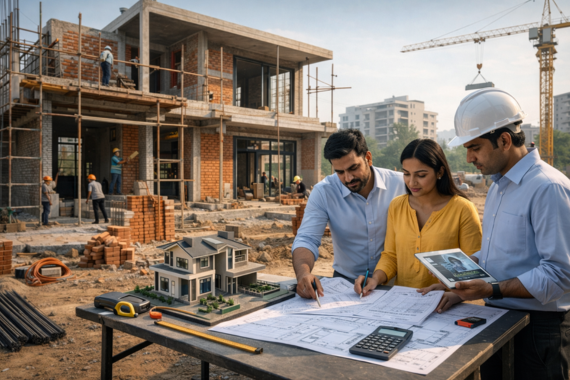
How to Plan Your Home Construction Budget in 2026 Without Compromising Quality
One requires financial planning in order to build a home in 2026. Material prices, labour costs, and regulatory requirements have been on the rise, thus increasing construction costs. Nevertheless, with the right strategy, homeowners can keep their home-building funds without compromising quality. Making informed decisions, making realistic guesses about costs and planning well are also very important in keeping your dream home within budget.
Knowledge of the Total Cost of Construction
The scope of expenses involved in construction should also be known before construction. An average home building budget comprises land preparation, architectural design, raw materials, labour, permits and finishing work. It has been reported that the cost of construction materials in India has been rising by about 8-12% in the last couple of years, with the primary cause being the upward prices of steel and cement.
One way to do that is to consult a civil engineering company at the early stages of planning to be able to estimate costs and prevent unexpected costs in the future. Professional planning is also one way of ensuring that the project is structurally and safety compliant.
Establish an Accurate Budget
One of the biggest errors that most homeowners commit is planning a budget without any loose change in the event of any unforeseen expenses. Professionals advise that a contingency fund of at least 10-15 per cent. of the total budget should be maintained. The buffer is used to cushion any unexpected change, price variations, or variability in the design or construction.
Hiring a professional builder in Delhi can also make you a realistic financial plan since local constructors know how much it costs in the area to use specific materials, labour fees and regulations.
Construction Matters more than Beauty
When budgeting for your home, always prioritise structural strength and durability, then look at the decorative features. Excellent construction materials of foundations, beams, and walls guarantee the sustainability of the safety and minimize the expenses of repair in the future.
As a case in point, high level buildings in projects like Delhi have very stringent building standards and are made of high quality materials making them stable and safe. Using the same values to construct houses will enhance the longevity of your house.
Compare Suppliers and Material
The choice of materials will also have a major impact on the total cost of construction. Compare suppliers of various materials rather than opting to go with the most expensive one, consider durability and maintenance cost and performance in the long run.
Plan Construction in Phases
Another viable method of expense management is staged construction. The cash flow management becomes more efficient and does not create pressure on the financial situation by splitting the project into phases, i.e., foundation, structure, and interior finishing.
There are a number of homeowners collaborating with a civil construction firm in Delhi who prefer to build the house in stages to offer flexibility and at the same time not compromising on the quality of work.
Conclusion
To plan a home construction budget in 2026, there is a need to balance financial discipline and quality standards. Learning construction expenses, maintaining a spare fund, selecting materials that will not wear out easily, and working with qualified experts can contribute to keeping your project on track and under budget without compromising its structural integrity and value.
To help homeowners with professional assistance in planning and implementing construction works, such companies as Gamut Buildcon offer expertise on residential and structural development projects, assisting the customer to successfully organise the budgets and preserve the construction standards.
Search
Featured Blogs