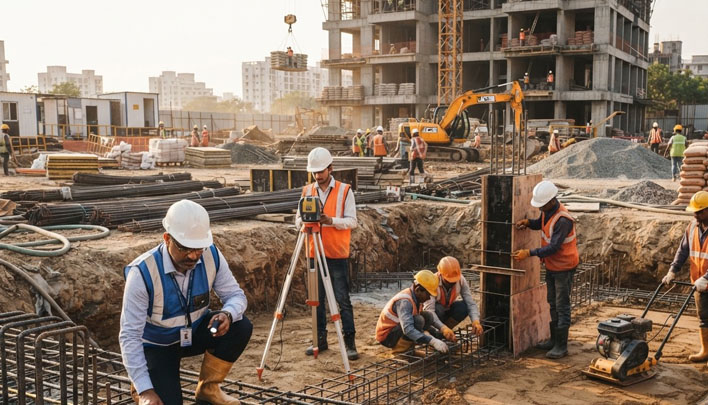
Common Foundation Construction Mistakes and How to Avoid Them
The basic structure of any structure is crucial to its strength and durability. From a residential property to a business complex or an institutional building, a small mistake in the foundation work can end up costing a lot of money, causing structural issues, and even posing a risk to safety. Learning about common mistakes and the proper step-by-step procedure for the foundations can help ensure long-term durability.
Importance of a Good Foundation
A Foundation is designed to safely distribute a structure’s load to the ground. If the building’s foundation is constructed correctly, the building can withstand fluctuations in soil pressure and weather conditions. But a lack of fundamental construction practices can make the entire structure vulnerable.
Mistake 1: Not considering Soil Investigation
A common mistake is proceeding with construction without soil analysis. Various soils have varying load-bearing capacities. If a geotechnical evaluation is not conducted, the building’s foundation could shift differently, resulting in cracks and damage.
How to avoid it:
Before starting the foundation step-by-step process, a detailed soil investigation should be carried out. Engineers can use the findings to decide on the type of foundation and how deep it needs to be.
Mistake 2: Poor excavation practices.
If the excavation is too deep or too wide, it will affect the stability of the foundation. Settlement can result from uneven excavation, which distributes the load unevenly.
How to avoid it:
Follow the approved drawing and engineering specifications at all stages of foundation construction. Frequent site visits can help uncover deviations early.
Mistake 3: Poor placement of reinforcement.
The use of steel reinforcement is an important aspect of foundation reinforcement. If not installed properly, with inadequate cover or spacing between bars, structural performance may be reduced.
How to avoid it:
Enforce quality control during construction to ensure that reinforcement is in place before concrete is poured. Verify spacing, alignment and cover based on design specifications.
Mistake 4: Concrete quality problem
Employing poor construction, low-quality materials, or mixing in the wrong proportions can compromise the foundation’s strength. Research indicates that one of the top causes of premature structural deterioration is poor-quality concrete.
How to avoid it:
Good quality assurance in construction should be adhered to to ensure that materials are tested and that sufficient batching and curing are followed. The reliability of the building’s foundation improves with consistent monitoring.
Mistake 5: Drainage Plan Problems
Over time, water may pool near foundations, causing soil erosion, which can reduce bearing capacity.
How to avoid it:
Include drainage systems in the foundation step-by-step process. Good grading and waterproofing will prevent moisture damage to the structure.
Conclusion
The first step to a successful project is to plan it carefully and properly execute all steps involved in foundation construction. Through soil testing, precise excavation, high-quality materials, and effective quality control and quality assurance in construction, the builders can prevent common construction mistakes and enhance the structure’s performance for years to come.
Gamut Buildcon recognises the importance of strong foundation skills and industry-accepted construction methods. Careful attention to detail at all phases of the foundation process will help ensure a safe, long-lasting and sound structure.
Search
Featured Blogs

Quality Management System (QMS): Standards, Benefits & Guide
October 14, 2026
Commercial Interior Design & Construction Trends in India for 2026
October 14, 2026