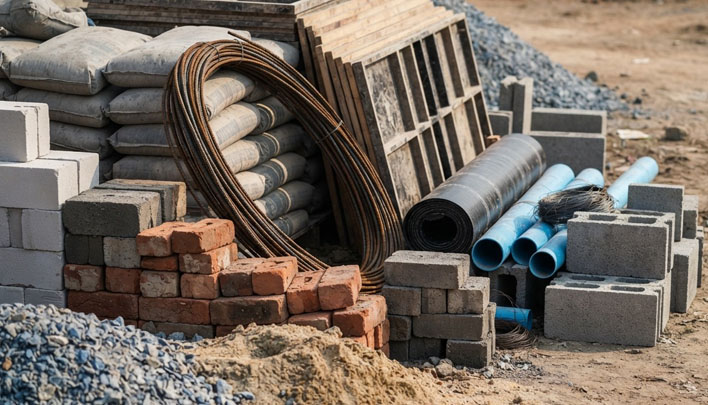
Key Materials Used in Building Foundation and Structural Construction
The materials used in building construction are critical to the building’s strength and durability. Choosing the right materials for residential buildings, educational institutions, or commercial projects is critical to the safety and performance of the building and its structural framework. With the advent of modern civil construction, engineers are concerned with selecting good materials that will resist environmental and load effects.
Importance of a Solid Base
The building’s foundation supports the entire load of the building. A proper foundation will not settle, crack or cause structural failure. Research in structural engineering indicates that almost 70% of a building’s stability depends on the design and selection of its foundation.
Concrete: The Backbone of Construction
Concrete is among the most commonly utilised materials in today’s civil building. It is prepared by mixing the cement, sand, aggregate and water. Concrete is widely used in foundations, columns, beams, and slabs because of its high compressive strength.
Depending on the load-bearing requirements, different concrete grades are used. Construction quality control is crucial to ensure durability and strength over time, and proper mixing and curing are part of it.
Steel rebar for structural strength.
Steel bars (rebar, or reinforcing bars) are used in concrete to resist tension. Concrete is strong in compression and weak in tension; steel reinforcement helps to balance the structural system.
The civil engineering company will typically deal with a project that requires the use of high-quality steel to withstand bending, seismic activity, and heavy loads.
Cement for Binding
Cement is an important material used in the construction of structures and foundations. It cements aggregates and greatly enhances the strength of concrete. It is critical to select the appropriate cement grade to achieve the desired structural performance.
In the construction industry, the regular testing of cement quality plays a crucial role in quality control, minimising the risk of cracks and early deterioration.
Aggregates and Sand
In the concrete, aggregate makes up almost 60-75% of the volume. They make up the bulk, strength and stability of the structure. Likewise, clean and graded sand enhances workability and bonding qualities.
Material testing is usually performed by a professional civil construction company in Delhi-NCR or at any location to ensure that aggregates and sand meet construction standards.
Quality Control Matters
It is impossible to get maximum benefits from any material without checks and tests. Good quality control in construction involves measuring the strength of concrete, checking the quality of steel, and monitoring the moisture content and consistency of materials. This method will improve safety, maintenance efficiency, and prolong the structural service life.
Conclusion
The implementation of construction activities depends on selecting suitable materials for producing the building’s foundation and structural framework. These materials, along with the right testing methods, all play a role in creating safe and durable structures. With ongoing advancements in construction methods, firms like Gamut Buildcon understand how crucial it is to prioritise material quality, engineering standards, and systematic quality checks to ensure reliable construction outcomes.
Search
Featured Blogs

Quality Management System (QMS): Standards, Benefits & Guide
October 14, 2026
Commercial Interior Design & Construction Trends in India for 2026
October 14, 2026