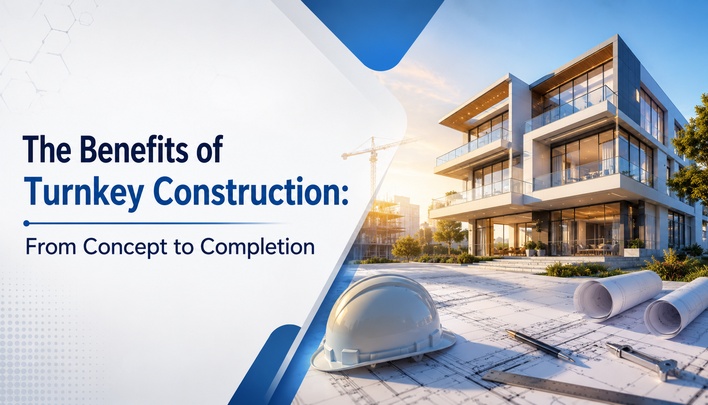
The Benefits of Turnkey Construction: From Concept to Completion
Building a home, office, commercial space, or other property involves much more than putting up walls and installing finishes. It requires planning, design, approvals, material procurement, skilled labour, budgeting, quality checks, and timely execution. Managing all these stages through separate vendors can quickly become stressful and difficult to coordinate. This is where turnkey project construction offers a practical solution. A turnkey contractor takes responsibility for the project from the initial concept and planning stage through construction, finishing, and final handover. Current construction providers in Delhi NCR commonly position turnkey services around single-point responsibility, integrated design and execution, cost clarity, project coordination, and smoother handover.
What Is Turnkey Project Construction?
Turnkey project construction is an end-to-end approach in which one contractor manages multiple stages of a construction project under a single agreement. Depending on the scope, this may include site assessment, architectural planning, structural design, approvals, procurement, civil construction, electrical and plumbing work, interiors, finishing, quality checks, and handover.
Instead of coordinating with separate architects, contractors, suppliers, electricians, plumbers, and interior teams, the client has one primary point of contact. This integrated approach can make decision-making simpler and help different stages of the project work together more efficiently.
6 Major Benefits of Turnkey Construction
1. One Point of Responsibility
One of the biggest advantages of turnkey construction is having a single team responsible for the overall project. When different contractors handle different stages, disagreements over delays, workmanship, or design changes can make problem-solving difficult.
With a turnkey model, responsibility is consolidated. The contractor coordinates the required teams and works towards a common project plan, giving the client greater clarity about who is managing the work.
2. Better Time Management
Construction projects often face delays when one stage cannot begin because another has not been completed. For example, interior work may be postponed because electrical or plastering work is still pending.
Turnkey contractors can coordinate these activities as part of one project schedule. Since design, procurement, construction, and finishing are managed together, dependencies can be identified earlier and the workflow can remain more organised.
3. Improved Budget Control
Construction costs can become difficult to track when materials, labour, design services, and finishing are sourced independently. A properly prepared turnkey agreement can provide a clearer understanding of the project scope and expected expenditure.
This does not mean that every turnkey project will have a fixed or completely unchanged cost. Design modifications, material upgrades, site conditions, and additional requirements can affect the final budget. However, having a defined scope and coordinated procurement can make financial planning easier.
4. Consistent Quality
Quality depends on everything from structural execution and material selection to electrical installations and finishing work. When multiple independent vendors are involved, maintaining consistent standards across all stages can be challenging.
A professional turnkey contractor can establish project specifications, coordinate skilled teams, monitor execution, and conduct quality checks throughout the construction process. This integrated supervision helps maintain greater consistency from the foundation to the final finish.
5. Less Stress for Property Owners
Construction requires frequent decisions, site visits, vendor coordination, material selection, and follow-ups. For property owners who have demanding professional or personal schedules, managing these responsibilities can be overwhelming.
Turnkey construction reduces much of this coordination burden. The contractor manages day-to-day execution while the client remains involved in important decisions such as design preferences, materials, budget, and final approvals.
6. Smooth Transition from Design to Handover
A major strength of turnkey construction is continuity. The same project team can take the concept through planning, construction, finishing, inspection, and handover.
This can be especially useful when design decisions need to be adapted during execution. Instead of transferring responsibility between separate agencies, the project remains under an integrated management structure.
Why Turnkey Construction Is Useful in Delhi NCR
Delhi NCR has a diverse construction environment covering residential properties, builder floors, villas, offices, retail spaces, and other commercial developments. Property owners may also need to coordinate different professionals depending on the location and nature of the project.
Choosing experienced turnkey contractors in Delhi NCR can simplify this process by bringing multiple construction functions under one coordinated team. For clients specifically looking for turnkey contractors in Delhi, an experienced local team can also understand the practical requirements associated with projects in the capital and surrounding areas.
Similarly, turnkey project construction in Noida can benefit from coordinated planning and execution, particularly for property owners who want to avoid managing several independent vendors.
For commercial and residential developments in Gurugram, experienced turnkey projects contractors in Gurgaon can coordinate construction, finishing, procurement, and other project requirements according to the agreed scope.
What Should You Check Before Hiring a Turnkey Contractor?
Before signing an agreement, property owners should review:
- Detailed project scope and inclusions
- Material specifications and quality standards
- Estimated project timeline
- Payment and milestone schedule
- Design and modification terms
- Approval and documentation responsibilities
- Quality inspection procedures
- Warranty or post-handover support
- Terms for additional or unforeseen work
- Previous projects and client references
A detailed contract is important because the meaning of “turnkey” can vary between contractors. The exact services, materials, timelines, exclusions, and responsibilities should always be clearly documented.
Why Choose Gamut Buildcon for Turnkey Construction?
Gamut Buildcon provides an integrated approach to construction, helping clients manage their projects through a more organised and coordinated process. From understanding the initial requirement to planning, execution, finishing, and handover, the focus remains on bringing different stages together under one project framework.
For property owners who want to reduce coordination hassles while maintaining visibility over their construction project, turnkey solutions can offer a practical way to move from an initial idea to a completed space.
Conclusion
Turnkey project construction brings design, planning, procurement, construction, finishing, and handover into a coordinated workflow. Its key advantages include simplified communication, better project coordination, improved time management, clearer budgeting, consistent quality control, and reduced involvement in day-to-day site management. The right contractor, however, remains essential. A clearly defined scope, transparent agreement, realistic timeline, and experienced execution team can make a significant difference to the final outcome.
If you are planning a residential or commercial project in Delhi NCR, connect with Gamut Buildcon to discuss your construction requirements and explore a suitable turnkey solution.
Frequently Asked Questions
1. What does turnkey construction include?
It can include planning, design, approvals, procurement, construction, electrical and plumbing work, finishing, interiors, quality checks, and final handover, depending on the agreed scope.
2. Is turnkey construction more convenient than hiring separate contractors?
Yes. A turnkey contractor manages multiple project stages through one coordinated team, reducing the need for the client to communicate with several independent vendors.
3. Can turnkey construction help control project costs?
It can make budgeting easier through a defined scope, coordinated procurement, and milestone-based planning. However, changes and additional requirements may affect the final cost.
The timeline depends on the project size, design, approvals, site conditions, materials, and scope of work. A professional contractor should provide an estimated schedule before execution.
5. Is turnkey construction suitable for commercial projects?
Yes. Turnkey solutions can be used for offices, retail spaces, commercial buildings, and other projects where coordinated planning and execution are important.
6. What should I discuss with a turnkey contractor before starting?
Discuss the complete scope, materials, design, budget, payment milestones, timeline, approvals, quality standards, exclusions, modification terms, and post-handover support.
Search
Featured Blogs

How to Choose the Right Home Design for Your Plot (& Family)
August 18, 2026
Home Construction in India: A Complete Beginner-Friendly Guide
August 18, 2026