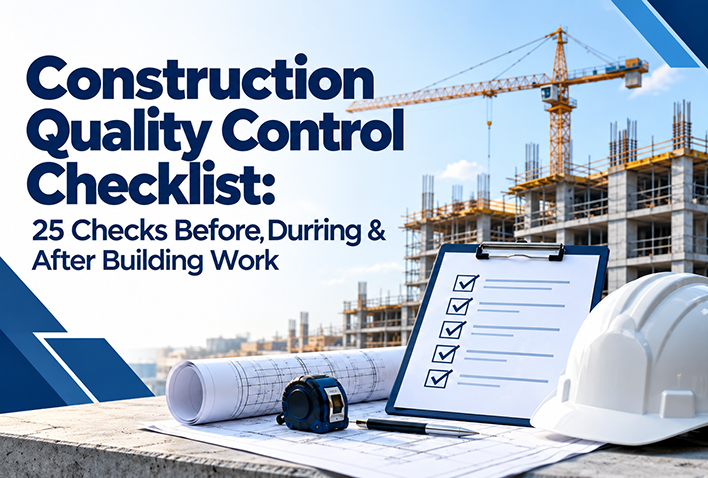
Construction Quality Control Checklist: 25 Checks Before, During & After Building Work
Construction quality control is essential for making sure a building is safe, durable, and completed according to approved drawings and specifications. From checking the site and materials before work begins to inspecting concrete, reinforcement, masonry, plumbing, electrical work, and finishes, every stage needs proper attention. A well-maintained construction quality checklist can help identify mistakes while they are still easy to correct.
For homeowners, contractors, and project managers, understanding quality control in construction is particularly important because many defects become difficult and expensive to repair once subsequent work covers them. A systematic inspection process helps maintain workmanship, reduce rework, and keep the project on track.
What Is Construction Quality Control?
Construction quality control is the process of inspecting materials, workmanship, measurements, and completed work against approved drawings, specifications, codes, and project requirements.
In quality control building construction, inspections should happen at defined stages rather than only at the end. For example, reinforcement and concealed plumbing should be checked before concrete or plaster covers them. This creates useful checkpoints where problems can be corrected before they become costly.
25-Point Construction Quality Control Checklist
The following quality control checklist for construction covers three important stages.
Before Construction and Major Work Begins
1. Verify approved drawings
Make sure the latest architectural, structural, electrical, and plumbing drawings are available at the site.
2. Check site measurements
Confirm plot dimensions, levels, boundaries, and setting-out points against the approved plans.
3. Review specifications
Check material specifications, workmanship requirements, construction methods, and applicable standards.
4. Inspect construction materials
Cement, steel, aggregates, bricks, blocks, tiles, pipes, and other materials should match approved specifications and be free from visible damage.
5. Check material storage
Store materials properly to protect them from moisture, contamination, damage, and deterioration.
6. Verify labour and workmanship capability
Ensure workers and subcontractors understand the required construction methods and quality expectations.
7. Prepare inspection checkpoints
Identify activities that require inspection or approval before the next stage can begin.
8. Check excavation and foundation preparation
Verify excavation dimensions, soil conditions, levels, and foundation preparation before concrete work.
During Construction
9. Inspect reinforcement steel
Check bar diameter, spacing, laps, supports, cleanliness, and concrete cover according to structural drawings.
10. Check formwork or shuttering
Confirm dimensions, alignment, level, stability, bracing, cleanliness, and properly sealed joints before concrete placement.
11. Verify embedded services
Electrical conduits, plumbing sleeves, openings, and other embedded items should be positioned according to drawings before concrete is poured.
12. Check concrete mix
Confirm that the approved concrete grade and mix are being used.
13. Conduct concrete workability checks
Carry out appropriate tests, such as slump testing, when required by the project specifications.
14. Monitor concrete placement
Ensure concrete is placed correctly and compacted adequately to reduce the risk of voids and honeycombing.
15. Start curing properly
Follow the specified curing method and duration to support concrete strength development and durability.
16. Inspect masonry work
Check brick or block quality, bonding, line, level, plumb, joint thickness, openings, and connections.
17. Check plastering
Inspect surface preparation, thickness, line, level, plumb, corners, and signs of hollowness or cracking.
18. Inspect waterproofing
Bathrooms, terraces, roofs, balconies, and other wet areas should be checked and tested before protective layers or tiles cover the waterproofing.
19. Check plumbing installation
Verify pipe routing, joints, slopes, supports, and pressure or leakage testing before concealment.
20. Inspect electrical work
Check conduit positioning, wiring, switch points, distribution boards, earthing, and other installations against approved drawings.
21. Document non-conforming work
Any defective material or workmanship should be recorded, corrected, reinspected, and formally closed rather than simply covered up.
After Major Construction Work
22. Inspect finished surfaces
Check flooring, tiles, plaster, paint, ceilings, doors, windows, and other finishes for visible defects.
23. Check dimensions and functionality
Doors should operate correctly, drainage should work properly, fixtures should function, and finished levels should be satisfactory.
24. Complete snagging and rectification
Prepare a room-by-room snag list covering cracks, uneven surfaces, leakage, damaged fittings, paint defects, and other unfinished work.
25. Complete final inspection and documentation
Before handover, review testing records, warranties, approvals, as-built information, completed snag items, and relevant quality records.
Why Quality Control in Construction Matters
A systematic approach to quality control in construction offers several practical advantages:
- Helps identify defects at an early stage
- Reduces unnecessary rework and material wastage
- Improves consistency of workmanship
- Supports structural durability and long-term performance
- Makes responsibilities easier to track
- Creates inspection records for important construction stages
- Helps prevent concealed defects from being discovered later
The most effective approach is to inspect work before, during, and after each critical activity, rather than waiting until the building is nearly complete.
Conclusion
A detailed construction quality control process is one of the simplest ways to maintain consistent standards throughout a building project. From approved drawings and material checks to reinforcement, concrete, masonry, waterproofing, MEP services, finishing, and final snagging, each stage deserves a documented inspection.
For reliable execution and professional supervision, Gamut Buildcon focuses on maintaining quality at every important stage of building work. If you are planning a residential or commercial construction project, connect with Gamut Buildcon to discuss your construction requirements and quality expectations.
FAQs
1. What is a construction quality control checklist?
It is a structured list of inspections used to verify materials, workmanship, dimensions, testing, and completed construction against approved requirements.
2. Why is quality control building construction important?
It helps detect defects early, improve workmanship, reduce rework, and ensure that construction follows approved drawings and specifications.
3. When should construction quality checks be performed?
Checks should be performed before work starts, during critical construction activities, before concealed work is covered, and after completion.
4. What should be checked before concrete pouring?
Reinforcement, formwork, dimensions, concrete cover, embedded services, cleanliness, approved mix, and required testing arrangements should be checked before pouring.
5. How does quality control in construction reduce rework?
Regular inspections identify mistakes while they are still accessible, allowing corrections before additional work makes them harder and more expensive to repair.
Search
Featured Blogs

Quality Management System (QMS): Standards, Benefits & Guide
October 14, 2026
Commercial Interior Design & Construction Trends in India for 2026
October 14, 2026