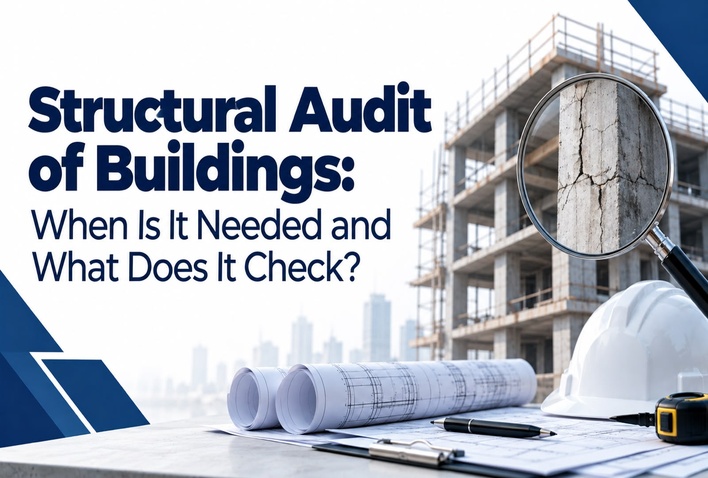
Structural Audit of Buildings: When Is It Needed and What Does It Check?
A building may look perfectly fine from the outside while developing problems in its structural components. Cracks, corrosion, water seepage, settlement, or changes in load can gradually affect the strength and stability of a property. This is why structural audit of buildings is an important part of maintaining older and existing structures. A professional audit helps identify potential weaknesses before they become major safety concerns. It is particularly useful for residential societies, commercial properties, industrial buildings, and structures undergoing renovation or expansion. In India, the need and frequency of structural assessments can also depend on local building regulations and the type of property.
What Is a Building Structural Audit?
A building structural audit is a detailed technical assessment of an existing building carried out by qualified structural professionals. The purpose is to understand the present condition of the structure and determine whether it remains safe for its intended use.
Unlike a basic maintenance inspection, an audit focuses on structural components such as:
- Foundations
- Columns and beams
- RCC slabs
- Load-bearing walls
- Roof structures
- Reinforcement and connections
- Signs of settlement, corrosion or deterioration
Depending on the building’s condition, engineers may also use non-destructive testing and structural analysis to understand material quality and structural performance.
When Is a Structural Audit Needed?
There is no single age that applies to every building across India. Requirements can vary according to state and local regulations. However, certain situations are clear reasons to arrange an assessment.
1. The Building Is Ageing
Older buildings naturally experience material deterioration and may require closer evaluation. Some regulations prescribe periodic assessments for particular categories of buildings. For example, BIS guidance for high-rise and special buildings provides for structural inspection beginning in the tenth year and subsequently at five-year intervals.
2. Cracks or Other Visible Damage Appear
Repeated cracks, exposed reinforcement, concrete spalling, unusual deflection, or persistent dampness around structural members should not simply be covered with paint. These signs may require professional investigation.
3. Major Renovation or Alteration Is Planned
Removing walls, adding floors, changing layouts, or installing heavy equipment can alter the loads acting on a structure. A structural assessment can help determine whether the proposed modification is suitable.
4. The Building Has Experienced an Unusual Event
Earthquakes, fire, flooding, impact, nearby excavation, or other incidents can affect structural stability. An assessment after such events can help determine whether repairs or strengthening are required.
What Does a Structural Safety Audit Check?
A structural safety audit examines different aspects of a building rather than relying on one visual observation.
Area Checked | What Engineers Look For |
Columns & beams | Cracks, corrosion, deformation and damage |
Slabs | Sagging, cracks and deterioration |
Foundation | Settlement and signs of instability |
Concrete | Strength and deterioration |
Reinforcement | Corrosion, cover and condition |
Building loads | Existing and changed loads |
Structural system | Stability and overall performance |
The engineer may review available drawings, previous repair records and alterations before conducting a site inspection. Where necessary, tests such as rebound hammer testing or ultrasonic pulse velocity testing can provide additional information about concrete condition.
Building Condition Assessment: Why Is It Important?
A building condition assessment helps property owners understand which problems need immediate attention and which can be handled through planned maintenance.
For example, a small surface crack may not indicate a serious structural problem, while a crack associated with corrosion or significant deformation could require urgent investigation. Professional assessment helps distinguish between these situations instead of relying on assumptions.
The final report may include observations, test results, photographs, identified defects, risk levels and recommendations for repair, strengthening, monitoring or further investigation.
What Happens After the Audit?
The next step depends entirely on the findings. A building may be considered satisfactory with routine maintenance, or engineers may recommend corrective measures.
Possible recommendations include:
- Repairing damaged concrete.
- Treating reinforcement corrosion.
- Strengthening specific structural members.
- Addressing water seepage and drainage problems.
- Monitoring cracks or movement.
- Carrying out detailed structural analysis where required.
The objective is not simply to identify defects. It is to provide property owners with useful information for making informed maintenance and safety decisions.
Why Choose Gamut Buildcon?
Structural concerns often arise during renovation, redevelopment and major property improvements. Working with an experienced construction and design team can help coordinate the assessment findings with subsequent repair or modification work.
Gamut Buildcon provides construction and design solutions with a practical understanding of existing buildings, renovation requirements and project execution. As an experienced interior design company in Delhi NCR, the team can also help homeowners and businesses plan interior improvements while considering the existing structure and project requirements.
Conclusion
A structural audit of buildings is an important way to understand the actual condition of an existing property. It becomes particularly valuable when a building is ageing, shows visible distress, undergoes major alterations, or has experienced an unusual event. Early assessment can help identify problems, plan appropriate repairs and support safer long-term use. If you are planning renovation, expansion or significant changes to an existing property, consider getting a professional structural assessment before starting the work.
Looking for reliable construction and interior solutions in Delhi NCR? Connect with Gamut Buildcon to discuss your building, renovation or design requirements.
FAQs
1. What is a structural audit of buildings?
It is a professional engineering assessment of an existing building to evaluate its structural condition, stability, defects and safety.
2. When should an old building undergo an audit?
The timing depends on the building type and applicable local regulations. Visible damage, major alterations or unusual events can also make an assessment necessary.
3. Does a structural audit only check cracks?
No. It can examine foundations, columns, beams, slabs, reinforcement, concrete condition, loads and other structural components.
4. Is structural audit the same as building inspection?
No. A routine inspection may identify visible maintenance issues, while a structural audit provides a more detailed engineering assessment of structural safety.
5. Can an audit be done before renovation?
Yes. It can be particularly useful before removing walls, adding floors, changing layouts or making other significant alterations.
Search
Featured Blogs

Quality Management System (QMS): Standards, Benefits & Guide
October 14, 2026
Commercial Interior Design & Construction Trends in India for 2026
October 14, 2026