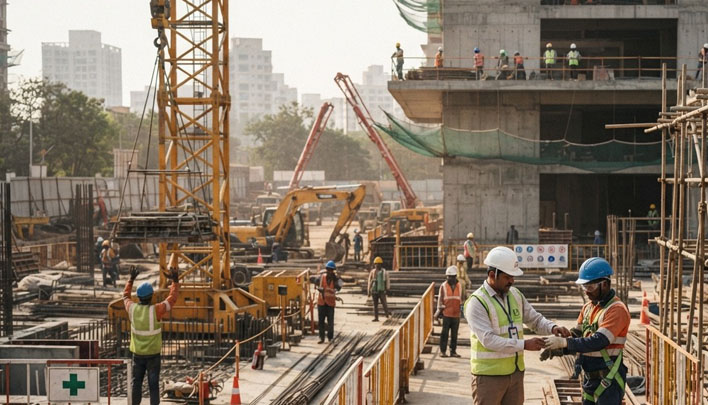
Construction Safety Standards in India: Essential Equipment & Best Practices for 2026
The construction sector is among the rapidly developing sectors in India, yet it is also risky. Construction Site Safety has never been as significant as it is today, with tougher rules and increased awareness in 2026. Adherence to good safety practice not only ensures the safety of workers but also enhances the efficiency of the project and minimises delays.
The importance of Construction Safety.
India reports thousands of injuries during construction annually, most of which are preventable. Accidents can be minimised by such simple things as wearing appropriate Construction Safety Equipment and adhering to site procedures. A secure location guarantees enhanced efficiency, reduced court cases, and employee motivation.
Necessary Construction Safety Equipment.
The basis of safety is the use of the appropriate equipment. All construction sites should have the right PPE in place to minimise risks to workers.
- Safety Helmets: Head injuries and falling objects.
- High-Visibility Jackets: Workers should be easily visible, and this is important in low-light conditions.
- Safety Shoes: Do not injure your foot with sharp or heavy objects.
- Gloves: These prevent hand cuts, chemicals, and burns.
- Safety Harnesses: This is necessary when working at heights.
- Protective Eyewear and masks: defender of dust, debris and harmful fumes.
It is not a guideline that one should provide credible Safety Equipment in Construction Site areas; it is a requirement as stipulated in Indian labour laws.
Electrical Safety at Construction Sites.
Electrical Safety in construction site environments is one of the most neglected ones. Malfunctioning wiring and open cables may cause severe injuries or even death.
Key practices include:
- Checking of electrical equipment and wires on a regular basis.
- Insulated equipment and correct grounding are used.
- The circuits should not be overloaded.
- Storing electrical systems in the absence of water and wet places.
- Education of employees to be able to work with electrical equipment.
These measures can be used to avoid shocks, fires, and damage to equipment.
Best Practices Construction Site Safety.
In addition to the equipment, safety is based on regular practices and awareness.
- Frequent Safety Training: The workers are to receive training on how to identify hazards and respond to an emergency.
- Good Signage: Signs are used to avoid accidents in risky areas.
- Site Cleanliness: Transferring the site minimises trips and falls.
- Supervision and Monitoring: It is done through frequent checks to make sure that rules are abided by.
- Emergency Preparedness: The first-aid kits, fire extinguishers, and evacuation plans should be easily accessible.
The 2026 is also being assisted by technology with wearable devices and AI-based monitoring that allows tracking the safety of workers in real time.
Conclusion
In India, the construction safety is changing to become stricter and more aware. Companies can make the working conditions in the construction sites safer and more effective by ensuring Electrical Safety in Construction Site activities, focusing on appropriate Construction Safety Equipment, and adhering to the best practices.
Meanwhile, the responsible builders, such as Gamut Buildcon, also realise that safety is not merely a mandate but a long-term investment towards the safety of workers and the provision of quality construction results.
Search
Featured Blogs

Quality Management System (QMS): Standards, Benefits & Guide
October 14, 2026
Commercial Interior Design & Construction Trends in India for 2026
October 14, 2026