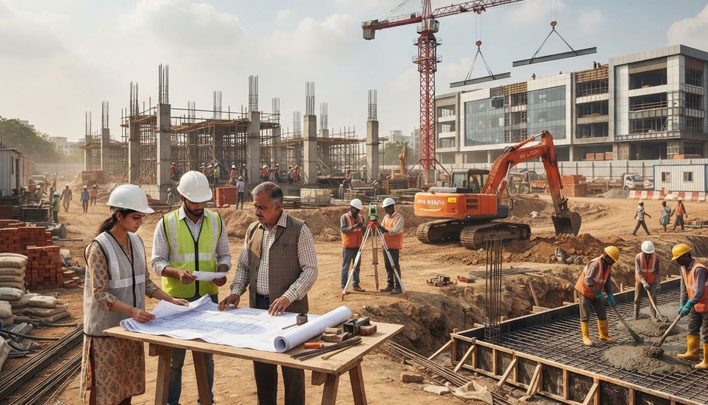
Step-by-Step Guide to Starting a Construction Project in India: From Planning to Execution
Coming to India to start a construction project may be a daunting task, particularly when it is an introduction. Since there is paperwork to be done for on-site execution, each step must be planned. Realising the proper strategy will prevent stalling, cost increase and lawsuits.
1. Define Your Scope of the Project.
The initial thing that should be done is to be clear about what you wish to build. It may be in a residential house, an office or an industry, having a vision will assist in making decisions. Write a simple plan of what you need, what you have as a budget and a schedule. This step is critical when dealing with Turnkey Project Construction, where plans are made, and all things are done as one.
2. Verification of Land and Legal Permits.
Land ownership and zoning laws should be checked before commencing any activity. Make sure that the land is suitable for building, and there is no legal tussle. Building plan approval, environmental clearance (where necessary) and local authority permits are also among the permissions that will be required. This step should not be skipped, as it may lead to severe legal issues in the future.
3. Planning and Design
After approvals are done, proceed to design. Architects and engineers will compile elaborate drawings which will consist of the structural layout and utility plans. Materials, layout and aesthetics are also determined at this phase. When plans are done correctly, mistakes will be minimised in the execution process, and the project will not exceed the budget.
4. Cost Estimation and Budgeting.
Make a comprehensive cost estimate that includes costs on materials, labour, approvals and contingency funds. Construction prices vary widely in India and depend on location and material quality. Turnkey Construction Projects are a common choice for many individuals to control expenses effectively, as they use a fixed-price model that minimises unanticipated costs.
5. Foundation Work
The building foundation determines the strength of any building. This phase entails testing on the soil, excavation and laying of the base structure. It is necessary to learn about the steps of Foundation Construction (marking, digging, footing and curing) in order to provide the stability and durability. The foundation work may have structural problems in the long run.
6. Construction Execution
Once the foundation is finished, there is the commencement of the superstructure work. This involves columns, beams, walls, roofing and the finishing work. Quality and timelines should be observed, which can be done by frequent site supervision. The role of this phase is significant in the labour of skilled workers and adequate material management.
7. Management and Control of the Projects.
Achieving a good flow of work is important in coordinating the activities of the architects, contractors, and suppliers. Here, Project Management Consultancy Services will also be useful. They assist in checking the progress, manage the costs, and ensure the work is safe and of a good standard.
8. Final Inspection and Delivery.
After construction has been done, an in-depth inspection is to be made. Confirm the structure, quality of the finishes, and adherence to the accepted plans. Once all the checks are cleared, the project is handed over.
Conclusion
The process of setting up a construction project in India demands proper planning, clarity in laws, and proper implementation of the project in each step. Since the scope definition is done for the final inspection, every process leads to project success.
Gamut Buildcon provides knowledge to individuals seeking systematic guidance and comprehensive support to ensure construction projects run smoothly and meet quality and completion schedules.
Search
Featured Blogs

Quality Management System (QMS): Standards, Benefits & Guide
October 14, 2026
Commercial Interior Design & Construction Trends in India for 2026
October 14, 2026