Construction Quality Checklist: How to Ensure High-Quality Work at Every Stage
It is not only about materials to build a strong and durable structure, but also about consistent checks in each stage. An adequate quality control regime in the construction industry can prevent the possibility of expensive errors, delays and safety hazards. It could be a small project or even a big site; a checklist helps in keeping everything on track.
1. Planning and Design stage.
Quality starts even before the construction process. Clearness of drawings, precision of measurements and sanction of designs are necessary. At this point, teams are to review:
- Load calculations and structural plans.
- Material specifications
- Approaches and permits by law.
Quality assurance in construction is a strong assurance that everything has been planned before construction commences.
2. Inspection
The strength of the structure directly depends on the quality of the materials used. Always check:
- Cement grade and freshness
- Certification and quality of steel.
- Sand and aggregate cleanliness.
One of the most widespread causes of structural problems is the use of poor-quality materials. Effective quality management in construction at the ground level is supported by proper inspection.
3. Foundation Work
The backbone of any building is its foundation. Any mistakes in this case can be disastrous in the long run. Key checks include:
- Soil testing reports
- Right depth and position.
- Correct curing of concrete.
Site supervision is also conducted regularly to ensure the foundation is safe and has a long lifespan.
4. Structural Construction
Accuracy and strength should be prioritised during this stage. Important factors include:
- Correct reinforcement placement
- Correct proportions of concrete mix.
- Timely curing process
Regular checks enhance durability and performance. Here is where the aspect of quality control in construction can make a significant contribution.
5. Safety Measures On Site
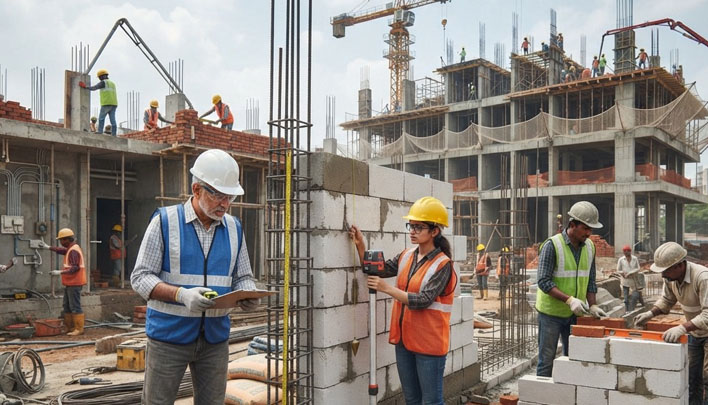
Any project cannot be finished without appropriate construction site safety. Workers should always follow safety rules, such as:
- Wearing safety shoes, gloves and helmets.
- Appropriate scaffolding and equipment.
- Maintaining the site is neat and well-organised.
Good construction safety not only ensures worker safety but also helps avoid delays and lawsuits.
6. Finishing and Final inspection.
The last step is one of details. Even minor errors may influence the overall quality. Check:
- Quality of wall finishing and paint.
- Electrical systems and plumbing.
- Doors, windows, and fittings.
The comprehensive inspection of the project will ensure that it is up to all standards before handover.
7. On-Periodic Checking and Records.
It is important to keep records of each and every stage. Daily reports, material notes, and inspection notes assist in monitoring the progress and ensuring accountability. This will help with better quality management in construction and ease future maintenance.
Conclusion
Construction of high quality is not done in a single step- it has to be done at all levels. A systematic checklist will enable improved outcomes, enhanced security, and sustainable structures from planning through completion.
In a project that is more systematic in execution and consistent in standards, Gamut Buildcon adopts a pragmatic approach which is more aligned with modern construction practices and, at the same time, offers reliability and quality throughout all the phases.